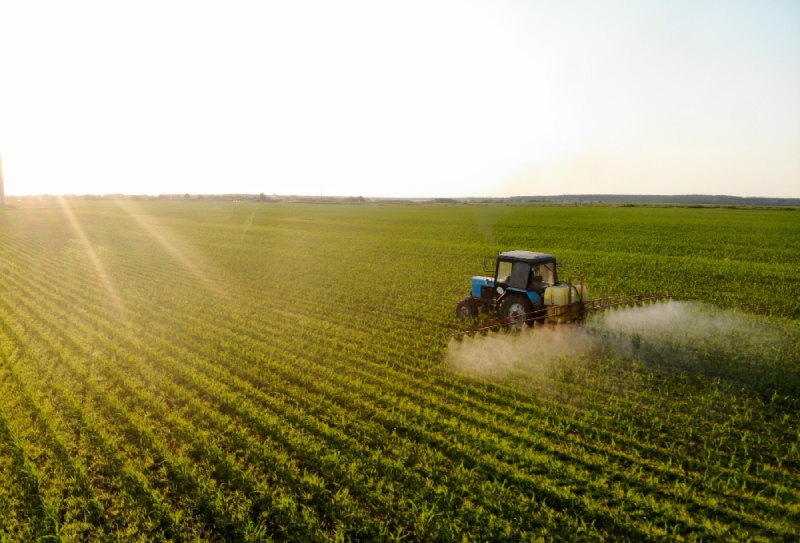
Farm and agricultural mortgages in Ontario finance properties where land use, farm activity, acreage, buildings, and business income can matter as much as the house itself. Unlike a standard residential mortgage, agricultural financing may require specialized underwriting, farm financial information, and an appraisal that separates or evaluates multiple property components.
Key Takeaways • There is no single Ontario rule that automatically classifies every rural property as a farm mortgage; lenders consider actual use, zoning, acreage, buildings, and income together. • A property can be rural without being agricultural, and an agricultural zoning or tax classification does not by itself determine the mortgage category a lender will use. • Farm financing may rely on both household income and farm business cash flow, requiring more documentation than a typical owner-occupied residential mortgage. • Farmland, a residence, barns, workshops, storage buildings, and other improvements may be valued differently because each contributes differently to marketability and lending security. • The most useful first step is to classify the property correctly before applying, then approach lenders whose policies align with the property use and borrower profile. |
What Counts as a Farm or Agricultural Property Under Ontario Mortgage Lending Rules
A farm or agricultural property is not defined by acreage alone. For mortgage purposes, lenders may consider the property’s actual use, municipal zoning, farm activity, size, buildings, source of income, and whether the residence or the agricultural operation is the dominant part of the property.
This distinction is important because Ontario has separate systems for zoning, property assessment, taxation, and lending. For example, Ontario’s Farm Property Class Tax Rate Program uses MPAC farmland assessment, farm-business use, and a valid Farm Business Registration number as eligibility conditions. That tax classification is relevant evidence, but it is not the same as a lender’s mortgage classification.
A small rural acreage with a home, a detached workshop, and limited personal-use land may still meet some residential lender policies. A working farm with crop or livestock income, substantial outbuildings, leased acreage, or property integral to a farm business may require agricultural or commercial-style underwriting. If you are unsure where your property falls, reach out to Bluewater to have the property details reviewed before assuming a standard mortgage will apply.
A farm mortgage refers to financing secured by property whose agricultural use or characteristics are material to the lender’s credit decision. The exact threshold varies by lender, which is why correct classification comes before rate shopping.
How Farm Income and Zoning Affect Which Lending Category Your Property Falls Into
Farm income and zoning can move a property from a residential lending file to an agricultural or commercial lending category by changing both the borrower’s story and the lender’s view of the collateral. The more the property depends on farm operations for its use or repayment, the more likely the lender will want to understand the farm as a business.
Farm income can be seasonal and may vary with prices, yields, input costs, weather, and production cycles. A lender may therefore request tax returns or financial statements, revenue and expense history, debt information, lease income, off-farm income, and cash-flow information. Requirements vary by lender and operation.
Zoning matters because it can limit how land is used, subdivided, developed, or resold. However, agricultural zoning does not automatically prevent a property from receiving residential financing, just as a residential address in a rural municipality does not guarantee standard residential treatment. Lenders apply their own property policies in addition to municipal and provincial rules.
For a broader view of how Bluewater approaches different property and borrower situations, review its mortgage solutions. The goal is clarity over confusion: identify the lending category first, then compare terms within the right category.
Why Standard Residential Mortgage Rules Do Not Always Apply to Rural and Agricultural Land
Standard residential mortgage rules do not always apply to rural and agricultural land because the property may combine a home with business-use land, multiple structures, farm revenue, and a smaller pool of comparable sales. This creates underwriting questions that a typical city home rarely raises.
A conventional owner-occupied mortgage usually starts with personal income, credit, debts, down payment, and residential value. A farm file can add farm cash flow, business liabilities, land productivity, leases, outbuildings, specialized improvements, and a different resale market.
- Income review: household employment income may still matter, but the lender may also analyze farm business income and the operation’s ability to service debt.
- Property review: the lender may need an agricultural appraisal rather than a standard residential appraisal, especially when the land and farm improvements account for a large share of the value.
- Documentation: purchase agreements, tax information, farm financial statements, business plans, leases, and details of buildings or farm use may be requested in addition to standard borrower documents.
- Loan structure: terms, amortization, security, fees, and repayment schedules may be more customized than those of a standard residential mortgage and can vary materially by lender.
The federal Canadian Agricultural Loans Act Program is one example of how agricultural credit can be structured differently. It is a government-backed loan-guarantee program administered by participating lenders for eligible farm purposes such as land purchases and farm buildings. It is not the only route to farm financing, and its eligibility rules should not be treated as universal mortgage rules.
For current CALA eligibility and lender rules, see the Canadian Agricultural Loans Act Program from Agriculture and Agri-Food Canada.
How Lenders Value Farmland, Outbuildings, and Acreage Differently Than a City Lot
Lenders value farmland and farm improvements differently from a city lot because the collateral comprises several components that may attract different buyers, serve different uses, and have varying resale values. The residence may matter, but the land, barns, shops, storage, livestock facilities, drainage, access, and other improvements can also affect the overall lending value.
Agricultural appraisals may use comparable farm sales and consider acreage, location, productive capacity, access, building condition, permitted use, and the contribution of improvements. A specialized building can cost more to construct than it adds in resale value, so a lender may recognize only part of that cost as security.
The Government of Canada’s CALA lender guidelines illustrate this whole-property approach: when a CALA loan is for farm real estate, the appraisal includes the buildings, including the home, while the lender still applies its own lending value and credit policy. Outside CALA, lender policies can differ, but the principle remains the same: a farm property cannot always be valued as though it were simply a larger residential lot.
Extra acreage can add value, but it can also narrow the lender and buyer pool when the property’s use, zoning, or structures fall outside standard residential guidelines.
How a Farm Mortgage Broker Matches Your Property to the Right Lender
A farm mortgage broker matches the property with a suitable lender by classifying the real estate and income before submitting an application. The objective is not to submit the file everywhere; it is to understand which lenders are comfortable with the acreage, zoning, farm activity, buildings, and borrower income, then compare realistic options.
A useful review begins with the financing goal, acreage, zoning, current use, residence, outbuildings, farm-business structure, income, debts, down payment or equity, and leases. From there, the advisor can determine whether the file is more likely to fit residential, agricultural, commercial, or specialized lending.
This is where breadth with purpose matters. A larger lender network is only useful when the lender’s policy actually matches the property. Sending a farm file to a lender that does not accept working farms, excessive acreage, certain outbuildings, or the borrower’s income structure can cause delays without improving the outcome.
Bluewater Financial Solutions provides mortgage services through Affinity Mortgage Solutions Inc., which operates as DLC Affinity Mortgage Solutions (Lic. No. 13093). Its role is to explain the category, documentation, trade-offs, and lender fit in plain language without promising approval.
If you are buying or refinancing an Ontario farm or rural property, schedule a free mortgage consultation before making assumptions based on a standard home-mortgage pre-approval. Bringing the property details and farm financial picture to the first conversation can make the lender’s search more focused.
Frequently Asked Questions
What Qualifies a Property as a Farm or Agricultural Mortgage in Ontario?
There is no single province-wide mortgage definition that qualifies every property as a farm. Lenders may look at acreage, zoning, actual agricultural use, farm income, outbuildings, tax or assessment information, and how much of the property value is tied to the residence versus the farming operation. A property can be farm-class for tax purposes and still require a separate lending review.
Do I Need to Be Actively Farming to Get an Agricultural Mortgage in Ontario?
Not always. A rural property may qualify under a residential mortgage policy even if it has acreage or hobby-farm features, depending on the lender. Dedicated agricultural financing usually requires a clearer farming purpose or business case. For example, the CALA Program targets farmers and people intending to become farmers, but it’s only one financing option.
How Is a Farm Mortgage Different From a Regular Residential Mortgage?
A regular residential mortgage primarily underwrites the borrower and the residential home. A farm mortgage may also underwrite the farm business, farm cash flow, agricultural land, and multiple buildings or improvements. Appraisal methods, required documents, loan structure, and eligible lenders can therefore differ, even when the property includes a normal house where the borrower will live.
Can I Get a Farm Mortgage Through a Mainstream Bank in Ontario?
Yes, some banks and credit unions offer agricultural financing, often through specialized agricultural or commercial lending teams. The federal CALA Program is also administered by participating lenders, including banks and credit unions. Whether a particular mainstream lender will finance your property depends on its current policies, the farm operation, collateral, income, and the requested loan structure.
Conclusion
Farm and agricultural mortgages in Ontario work best when the property is classified correctly before the financing search begins. The house, land, zoning, farm income, acreage, and outbuildings can all affect which lenders and loan structures are realistic. Bluewater’s approach is to replace guesswork with a clearer view of the property, the borrower, and the available lending paths. If you are considering an Ontario farm or rural property, schedule your free mortgage consultation and review the full file before you commit to a financing assumption.
General information only: This article does not constitute mortgage, financial, legal, tax, appraisal, or zoning advice. Agricultural lending criteria, property classifications, program rules, fees, and lender policies vary and may change. Confirm zoning and property-use questions with the applicable municipality or a professional, and review financing with an appropriately licensed mortgage professional before making a decision.